
Practicing another culture’s rules of etiquette has which of the following effects?
2. Always take note of what you pick out of the refrigerator at the office; if you haven’t kept some food or drink in there you have no business taking anything out https://cesurerboyaci.com/whatsapp-windows-ve-mac-masaustu-uygulamasi/. Leftovers should also be thrown away rather than getting the refrigerator stocked with junk.
Invite anyone who is going to be a part of the baby’s life to the shower, regardless of gender. More men are attending baby showers these days—and they should. The change is a sign that guys are taking a more active role in parenting their children than dads did in the past, Parker explains.
Many dog owners think it’s OK for their pooch to run off-leash, but animals, even well-trained ones, can be unpredictable (as can little humans in the area). Good etiquette says that if you are in an area that requires leashes, then you keep your dog on a leash, says Grotts. If you want to let your dog run free, take Fido to an off-leash dog park … where you should also keep a few dog park etiquette tips in mind.
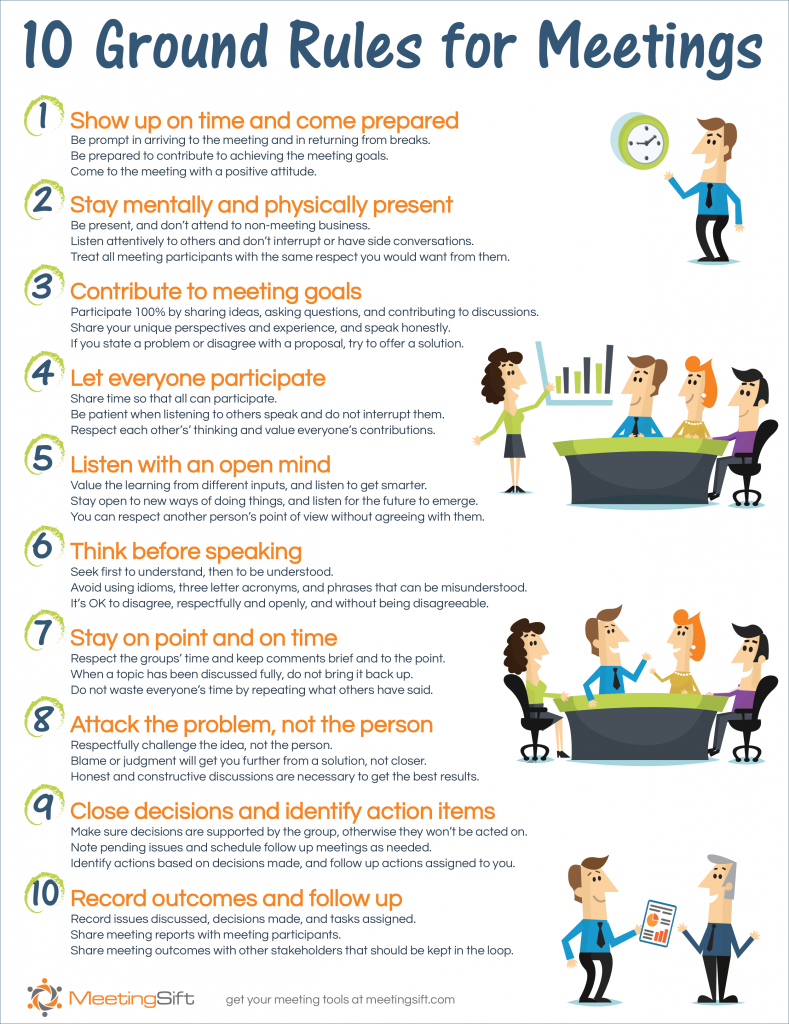
Rules of meeting etiquette
Sure, remote work means comfort, but showing up in your wrinkled sleepwear? Not a good look. You don’t have to be in full corporate attire, but at least wear something presentable—it signals respect for your team.
Every company has its own culture and that culture will determine what it means to run a successful, respectful, and efficient meeting at your organization. There are some important meeting etiquette rules that are more universal, while others will be developed over time and be unique to your culture. In either case, they ultimately determine what is appropriate, and what isn’t, during a meeting.
Establishing clear meeting guidelines through tools like Fellow’s Meeting Guidelines and templates is essential for setting expectations, ensuring efficient meetings, and ultimately shaping a positive company culture.
As a leader, you can find a balance between actively listening and participating in discussions. A good rule of thumb is to listen at least twice as much as you speak, especially when there are a lot of people in the room.
Clear objectives that need to be covered can be presented before the meeting, and if some of the things can be solved and answered over a simple email, that can shorten or even make the meeting unnecessary.
10 rules of online etiquette
According to Apollo Technical, 86% of employees and executives think a lack of effective collaboration and communication is the leading cause for errors in the workplace. Learn how to speak effectively through not only words, but body language, tone, word choice and other nonverbal cues with Pryor Learning’s award-winning communication skills training.
Sharing is one of the principles behind the majority of internet services. If you are knowledgeable in an area then you have something to offer! Share what you know and it will help other users. You can share your experiences as part of this – both positive and negative. If you have made any mistakes, sharing these can help prevent others from doing the same. If you ever ask questions to other users, it is good practice to post a summary of the responses. This enabled everyone to benefit from answers and does not require each individual to do the same synthesis.
Additionally, Zhu Scott says to remember that the online world is international. A piece of content may have a cultural context you’re not familiar with—so think before you jump to conclusions. “People have a tendency to use their own lens to judge other people without appreciating the cultural context,” she says. “Don’t judge too quickly.”
In this digital age, mastering the art of online politeness is not just a courtesy; it’s a necessity. As we’ve explored the foundational rules of netiquette, from respecting everyone online to understanding the intricacies of various communication platforms, we’ve laid the groundwork for a positive digital experience.
If you are forwarding an email message, use BCC (blind carbon copy) rather than CC (carbon copy) when sending it to more than one person. This helps protect the privacy of all the other email recipients.
Research has shown that, especially for Generation Z, while socializing online can create a sense of connection, it can also elicit a sense of isolation, says Halbert. That’s because we tend to compare the overwhelmingly positive posts we see with our own more nuanced lives—and feel that we fall short. It’s important to remember that online connections cannot replace community and building in-person relationships, Halbert says. If the internet is your primary way of connecting with people, that’s very dangerous.